Why Does a Hot Metal Display a Rainbow?
Unlike hydrogen gas, a metal (e.g., iron, copper, tungsten) when heated does not display discrete lines in the electromagnetic spectrum. Instead, a hot metal displays a continuous spectrum of colors, a rainbow, which begs the question: Why does a hot metal display a rainbow?
Delocalized Electrons of a Metal Have Energy Bands
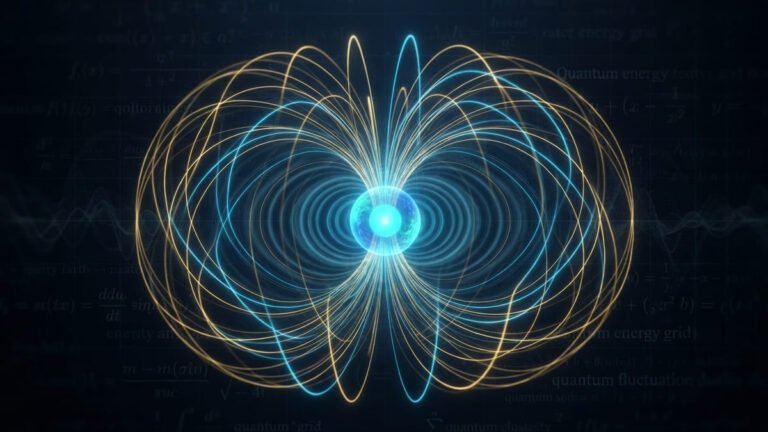
In a pure metal, the outermost electrons (aka valence electrons) delocalize, forming a sea of electrons. These electrons have ranges of allowed energies, that is, energy bands. When the metal is hot, thermal motion continually jostles these delocalized electrons. Each time one of them drops to a lower energy within a band, it emits a photon.
Energy Drops Within a Band Cause the Rainbow That a Hot Metal Displays
The possible energy drops form a continuum. As a result, the photons come out at a continuum of wavelengths. That is the rainbow. The hotter the metal gets, the more energetic the jostling becomes. Electrons can climb higher within an energy band and fall farther when they lose energy. Consequently, the metal radiates across many wavelengths as its temperature rises. Because the possible energy drops stretch across a wider range, the glow shifts from dull red through orange and yellow towards white. The light is still a continuum of wavelengths, a rainbow.1 Only the balance of colors changes with temperature.2
As an analogy, a metal’s energy band is not a ladder with a few fixed rungs: It is more like a continuous ramp. An electron can start at almost any height on that ramp and fall to almost any lower height. Each different drop releases a photon of a slightly different wavelength. Therefore, the colors blend into one another instead of appearing as discrete lines.
A Metal Held in a Blacksmith’s Fire Displays the Rainbow
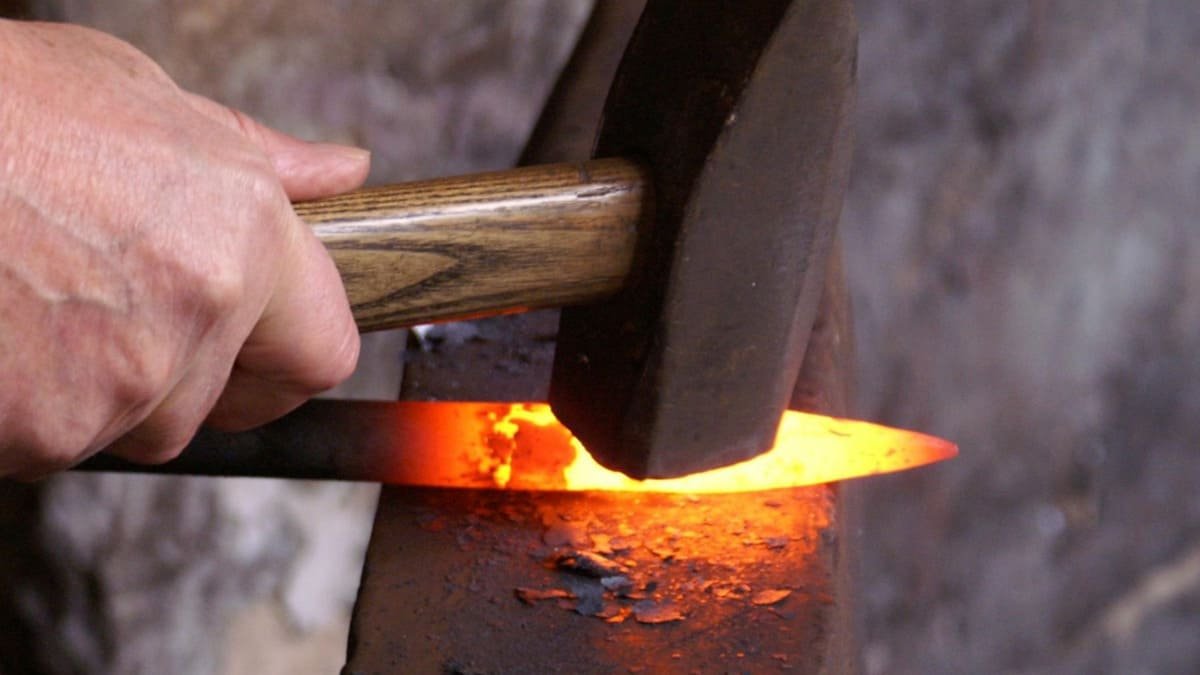
A piece of iron held in a blacksmith’s fire starts as a dull red glow, but as the temperature increases, that hot metal turns bright orange, then yellow, and then white. The light comes from the sea of delocalized electrons moving through energy bands and emitting photons of many wavelengths at once.
A Common Cause Is at Work
Why does a hot metal display a rainbow? The same delocalized electron sea that lets a metal conduct electricity and bend without shattering also lets a hot metal glow with every color instead of just a handful of discrete lines.
- Hydrogen atoms do not display a continuum of wavelengths. These atoms all have the same discrete energy levels. An electron can fall only from one allowed level of energy to another. Therefore, only discrete lines appear in the electromagnetic spectrum of hydrogen. ↩︎
- “Balance of colors” means the relative strengths or proportions of the different wavelengths in the continuous spectrum. As the metal gets hotter, short-wavelength (bluer) light becomes stronger relative to long-wavelength (redder) light, so the overall color shifts from red toward white. The light remains a smooth continuum the whole time; only how the wavelengths are weighted changes. ↩︎