Dipole
A dipole is a system with two opposite, connected poles (e.g., a north and a south pole, a plus and a minus pole).

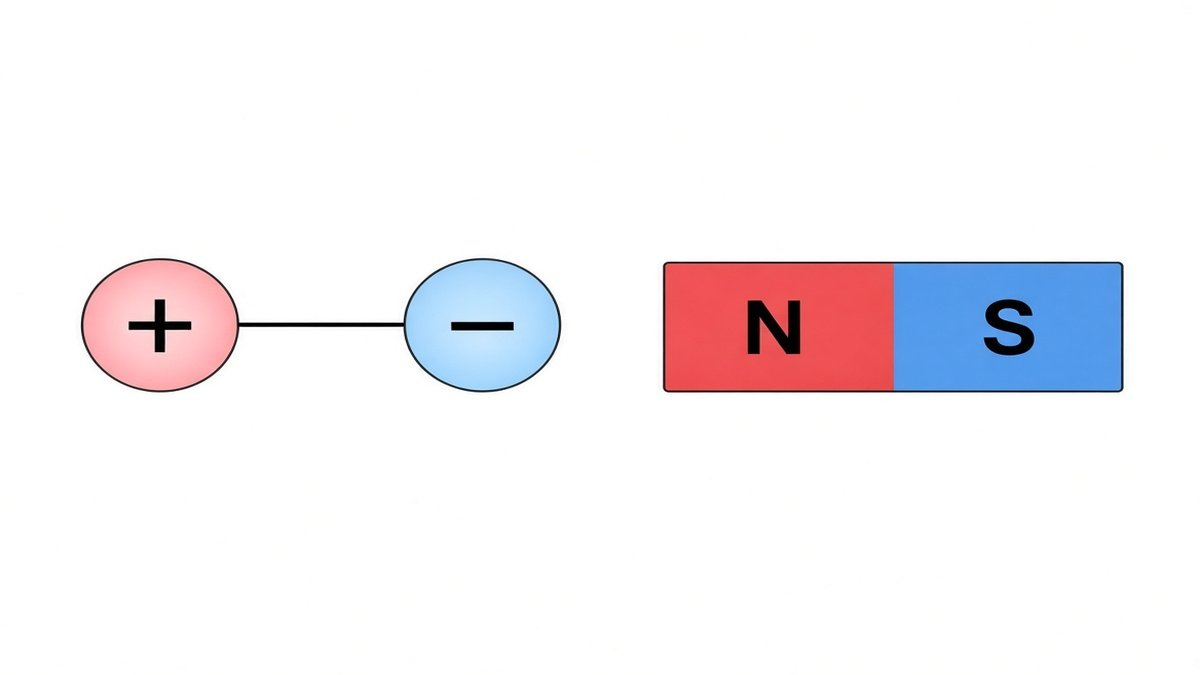
A dipole is a system with two opposite, connected poles (e.g., a north and a south pole, a plus and a minus pole).
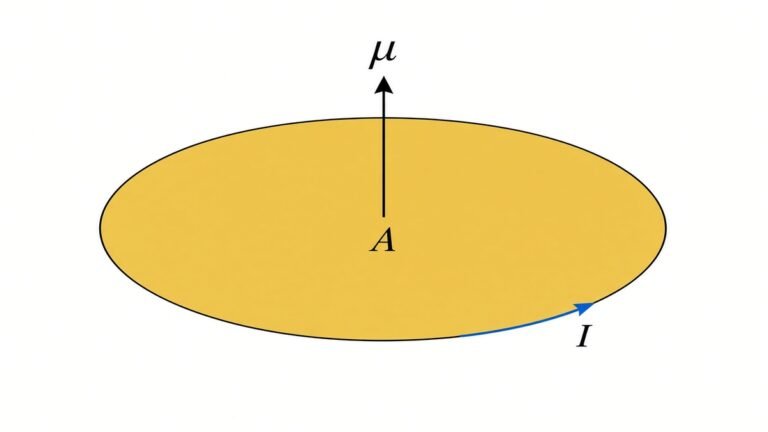
A magnetic dipole moment (μ) measures the strength and orientation of a magnetic dipole (e.g., a bar magnet, a loop of electricity). Imagine a tiny, circular racetrack where electrical current is constantly zooming around in a loop. This swirling electricity creates a miniature north and south pole, acting exactly like a microscopic compass needle. The…

When a parcel of air rises and expands, it is not losing heat to its environment. Instead, it spends its own energy to push other air out of the way. That spent energy is what we feel as a drop in temperature. This process is called adiabatic cooling. An adiabatic process is one that happens…
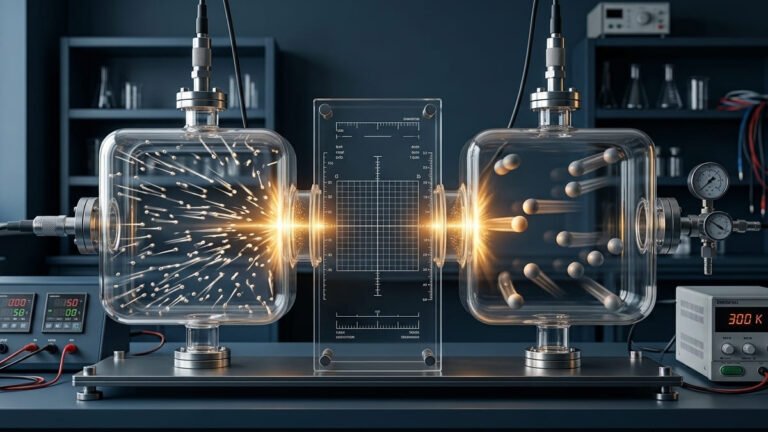
Introduction Real gases (e.g., air) behave like ideal gases under normal conditions. Consider two ideal gases: one made of very light atoms and another made of very heavy molecules. If the two gases are at the same temperature, they have the same average translational kinetic energy (Kavg). You may ask naturally then, “Do different gases…
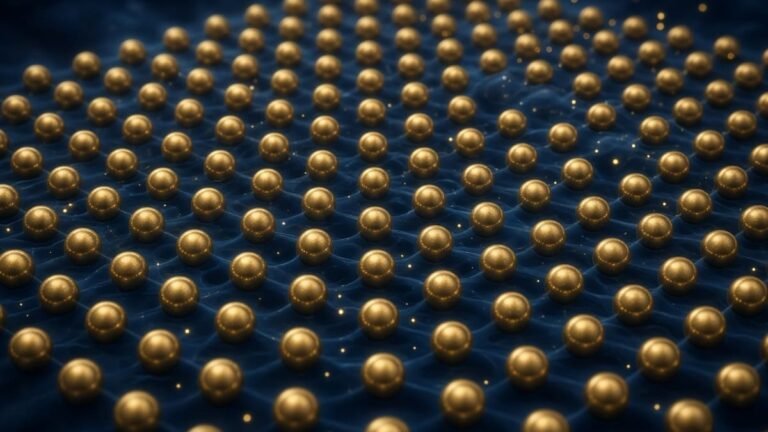
What is the sea of electrons in a metal? In a metal, the outermost electrons (aka valence electrons) leave their parent atoms and move freely throughout the solid. These electrons delocalize. Scientists picture them as a “sea of electrons” (or “an electron cloud”) surrounding a three-dimensional lattice of positive metal ions. This arrangement accounts for…

Angular momentum (L) is the rotational counterpart of linear momentum. It measures the quantity of rotational or orbital motion an object possesses, taking into account both its angular velocity and how its mass is distributed about the axis or point of rotation. The larger angular momentum is, the larger the net external torque required to…

Unlike hydrogen gas, a metal (e.g., iron, copper, tungsten) when heated does not display discrete lines in the electromagnetic spectrum. Instead, a hot metal displays a continuous spectrum of colors, a rainbow, which begs the question: Why does a hot metal display a rainbow? Delocalized Electrons of a Metal Have Energy Bands In a pure…